 9160514747 | 6281024537
 rameshmicroscopedentalclinic@gmail.com
 #17/112, Near R.T.C. Bus Stand, Ganugakottu Road, Opp. Abhimanyu Towers, Edepalli, Machilipatnam - 521001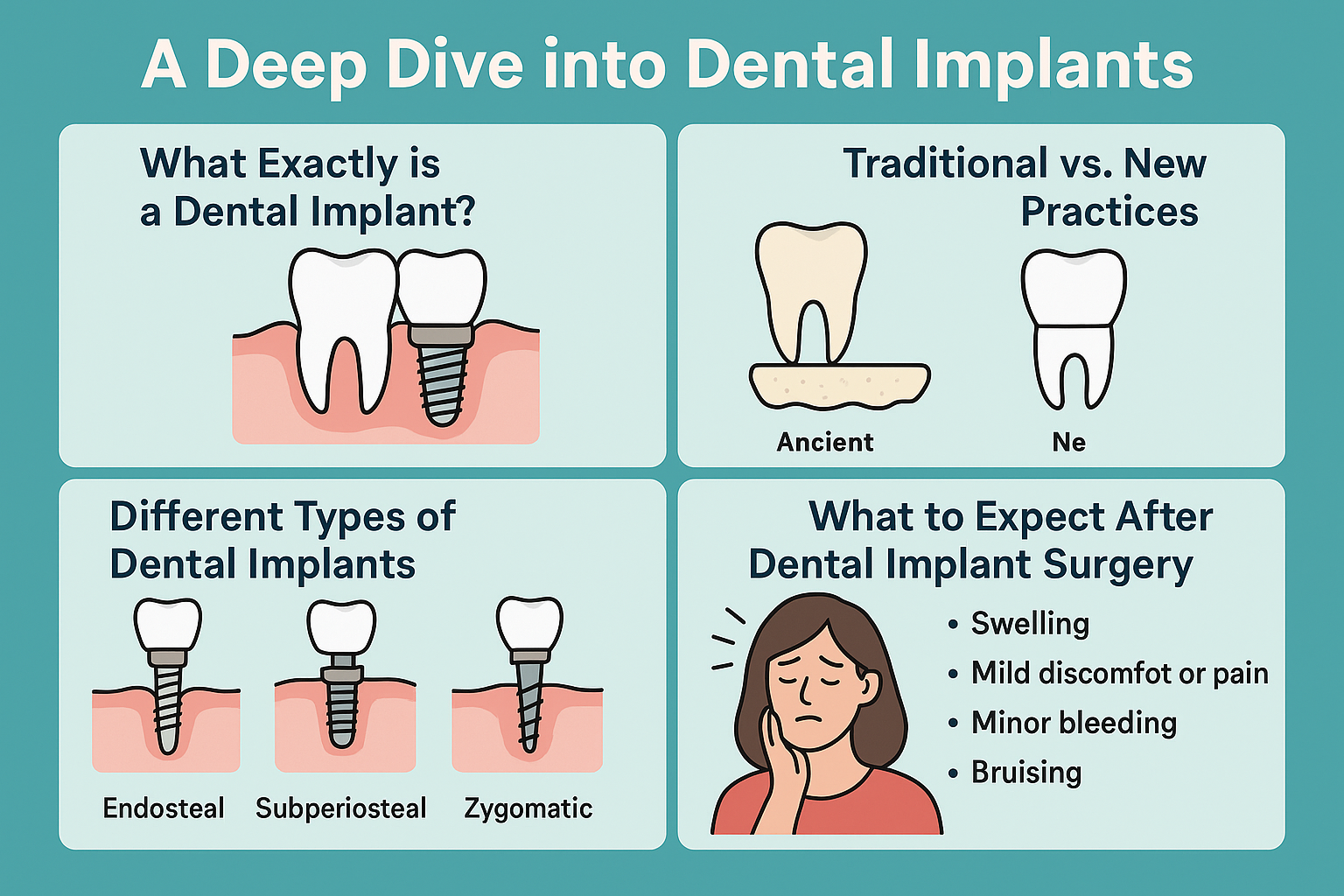
A Deep Dive into Dental Implants
Losing a tooth can be a negative experience, impacting not just your appearance but also your ability to eat, speak, and even your self-confidence, leading to discomfort, self-consciousness, and even further oral health issues. Humanity's journey to replace missing teeth has dramatically progressed from simple attempts to today's highly advanced dental implants. This comprehensive guide will delve into the world of dental implants, exploring their benefits, traditional and modern practices, and future advances.
What Exactly is a Dental Implant? The Meaning Behind the Magic
At its core, a dental implant is an artificial tooth root, typically made of titanium, that is surgically placed into your jawbone. This titanium post then fuses with the bone in a process called osseointegration, creating a strong and stable foundation for a replacement tooth or bridge. Unlike traditional dentures that rest on the gums or bridges that rely on adjacent teeth for support, dental implants are a permanent solution that mimics the feel and function of natural teeth. This revolutionary approach has transformed restorative dentistry, offering a long-lasting and aesthetically pleasing way to reclaim your smile.
From Ancient Origins to Modern Marvels: Traditional vs. New Practices
The desire to replace missing teeth is far from new. Archaeological evidence suggests ancient civilizations used various materials, from carved shells to animal bones, to attempt tooth replacement. These early "traditional practices" were often crude and largely ineffective, aiming more for aesthetic improvement than functional restoration. Fast forward to the early 20th century, and removable dentures became the standard for tooth replacement, offering some functional benefit but often leading to discomfort, speech difficulties, and bone loss over time. Fixed bridges, while more stable than dentures, still required the alteration of healthy adjacent teeth.
The modern era of dental implants truly began with the accidental discovery of osseointegration by Professor Per-Ingvar Brånemark in the 1960s. This breakthrough, observing how titanium could fuse with bone, paved the way for the sophisticated "new practices" we see today. Modern dental implantology utilizes advanced imaging techniques, biocompatible materials, and refined surgical procedures to achieve incredibly high success rates. Today, finding the best dental clinic in Machilipatnam means finding a practice that embraces these modern advancements for optimal patient outcomes.
Different Types of Dental Implants
While the basic concept of a dental implant remains the same, there are several types designed to address different patient needs and anatomical considerations:
Endosteal Implants:
These are the most common type of implant. They are typically screw-shaped, cylinder-shaped, or bladed and are surgically placed directly into the jawbone. If you're considering implants, it's highly likely your dentist at the best dental hospital in Machilipatnam will recommend this type.
Subperiosteal Implants:
These implants are placed on top of the jawbone, but still under the gum tissue. They are used for patients who have insufficient bone height and cannot undergo a bone graft. While less common than endosteal implants, they offer an alternative for specific cases.
Zygomatic Implants:
These are much longer implants that are anchored in the cheekbone (zygoma) instead of the jawbone. They are typically reserved for patients with severe bone loss in the upper jaw who cannot support conventional implants. This is a more complex procedure and highlights the specialized expertise you'd find at the best dental clinic in Machilipatnam.
Mini Dental Implants (MDIs):
As the name suggests, MDIs are smaller in diameter than traditional implants. They are often used to stabilize lower dentures or in situations where space is limited. While offering a less invasive option, they may not be suitable for all cases.
The choice of implant type depends on factors like bone density, the location of the missing tooth, and your overall oral health. A thorough consultation with an experienced implant specialist at the best dental hospital in Machilipatnam is essential to determine the most appropriate option for you.
When is Dental Implantation Required?
Dental implants are a versatile solution for a variety of situations. Here are some common scenarios where dental implantation is required or highly recommended:
Single Missing Tooth:
When you lose one tooth, an implant can replace it without affecting the adjacent healthy teeth, unlike a traditional bridge which requires grinding down those teeth.
Multiple Missing Teeth:
Implants can support a bridge or even individual crowns for multiple missing teeth, providing a more stable and natural-feeling solution than removable partial dentures.
All Teeth Missing (Edentulism):
For individuals who have lost all their teeth, implants can be used to anchor a full set of dentures, providing unparalleled stability and preventing the slipping and discomfort often associated with conventional dentures. This significantly improves quality of life.
To Preserve Jawbone Structure:
When a tooth is lost, the jawbone in that area can begin to resorb or shrink due to lack of stimulation. Implants act as artificial roots, providing the necessary stimulation to help preserve bone structure and maintain facial aesthetics.
To Improve Chewing Function and Speech:
Missing teeth can severely impair your ability to chew food properly, leading to dietary restrictions and digestive issues. They can also affect speech clarity. Implants restore full chewing function and help improve articulation.
To Enhance Aesthetics and Self-Confidence:
A gap in your smile can be a source of self-consciousness. Implants provide a natural-looking and feeling replacement, restoring your smile and boosting your confidence.
What to Expect After Dental Implant Surgery
The recovery time for dental implants varies depending on the individual, the number of implants placed, and whether additional procedures like bone grafting were necessary. Generally, the initial healing phase after the surgical placement of the implant takes about 7-10 days. During this time, you might experience:
- Swelling: This is common and can be managed with ice packs.
- Mild Discomfort or Pain: Over-the-counter pain relievers or prescribed medication can alleviate this.
- Minor Bleeding: Some oozing is normal in the first 24-48 hours.
- Bruising: This is less common but can occur.
Your dentist at the best dental clinic in Machilipatnam will provide detailed post-operative instructions, including dietary restrictions (soft foods), oral hygiene guidelines, and activity limitations.
The most critical part of the recovery, however, is the osseointegration period, where the implant fuses with the jawbone. This process can take anywhere from 3 to 6 months, or sometimes even longer. During this time, it's crucial to follow your dentist's instructions and attend all follow-up appointments. Once osseointegration is complete, an abutment (a connector) is placed on the implant, and finally, the custom-made crown, bridge, or denture is attached, completing the restoration. The overall journey to a fully restored smile with dental implants requires patience, but the long-term benefits are well worth it.
Future Advances in Dental Implantation
The field of dental implantology is constantly evolving, with exciting advancements on the horizon that promise to make the procedure even more predictable, efficient, and accessible. Some key areas of future development include:
Enhanced Materials:
Research is ongoing into new implant materials with improved biocompatibility, strength, and even antimicrobial properties, potentially leading to faster healing and reduced risk of complications.
Growth Factors and Stem Cells:
Utilizing growth factors or even a patient's own stem cells could significantly accelerate bone regeneration around the implant, reducing healing times and making implants viable for patients with less bone.
3D Printing and Customization:
Advanced 3D printing technologies are already being used to create highly customized surgical guides, but future applications could involve 3D printing entire implants or even bone grafts with unparalleled precision. This level of customization ensures a perfect fit and optimal integration.
Robotics and AI in Surgery:
Robotic-assisted surgery and artificial intelligence are being explored to enhance precision during implant placement, potentially minimizing human error and improving long-term success rates. Imagine a more accurate and efficient procedure at your best dental hospital in Machilipatnam.
Peri-implantitis Prevention and Treatment:
Peri-implantitis, an inflammatory condition affecting the tissues around dental implants, is an area of intense research. Future advancements will focus on better prevention strategies and more effective treatments to ensure the long-term health of implants.
Biological Coatings:
Implants with special biological coatings that promote faster bone growth or resist bacterial adhesion are under development, further improving integration and reducing the risk of infection.
Conclusion
In conclusion, dental implants represent a pinnacle of modern dentistry, offering a durable, functional, and aesthetically pleasing solution for missing teeth. From understanding their meaning and different types to knowing when they are required and what to expect during recovery, this comprehensive guide should provide you with a solid foundation. If you're considering dental implants, seeking consultation from a reputable provider, such as the best dental clinic in Machilipatnam or the best dental hospital in Machilipatnam, is your first and most important step towards reclaiming your confident smile.
 Emergency No. : (+91) 9160514747